What would it be if all our children were born healthy …. We love our children like any other and do everything to make their lives as livable and beautiful as possible. We really want to embrace every unique trait of our loved ones, while steering clear of using terms like “dysfunction,” “impairment,” or anything that might sound like it’s really focusing on the medical side of things.
Awareness Day
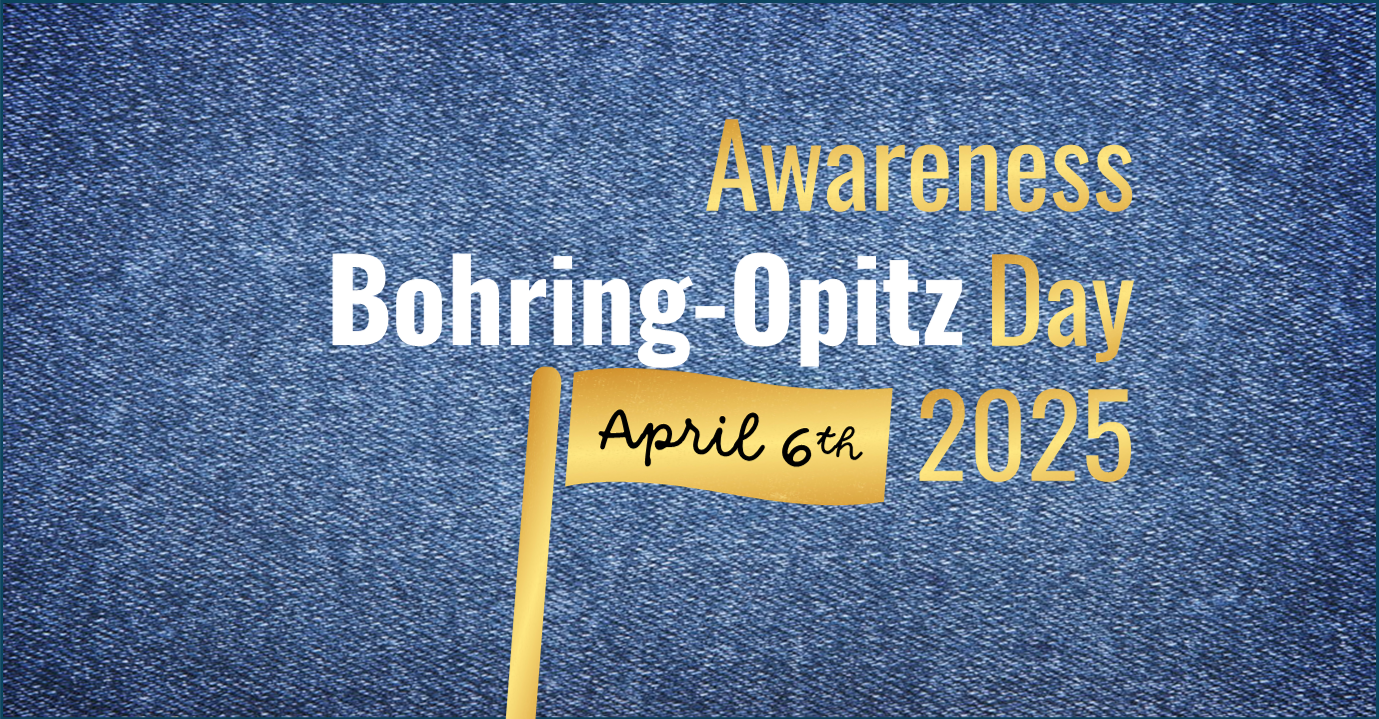
It’s that day of activism! Bohring-Opitz Syndrome Awareness Day is on April 6th – chosen to commemorate the day of creation of the international support group in 2011, but most of all it is the opportunity to educate the public and the medical community about this syndrome and the challenges faced by those living with Bohring-Opitz Syndrome.
Bohring-Opitz Syndrome (BOS) is a rare genetic disorder caused by de novo mutation in the ASXL1 gene. It is characterized by developmental delays, intellectual disabilities, distinctive facial features, various physical abnormalities of varying degrees of severity.
Many people may not have heard of this syndrome as it is ultra rare, with fewer than 400 people diagnosed worldwide. But it’s equally important to highlight the human experience of those affected and their carers behind the statistics.
BOS Community
It’s time that our Awareness day also calls for social justice and racial justice, recognizing the intersection of race and ethnicity, and that socio-economic status influences the experiences of individuals with BOS and their caregivers. For this very reason, people living with BOS, as well as those from historically underrepresented, marginalized, and/or underprivileged backgrounds and communities, need allyship and support from key groups.
Fortunately, the vast majority of BOS families are united in the first Bohring-Opitz Syndrome Parent Support Group on Facebook, which has since helped connect countless families worldwide.
In our parent support group we knew about the importance of community diversity, inclusion, and equity, as well as cultural sensitivity, to ensure that individuals with BOS and their families feel a sense of belonging and are not marginalized or excluded due to their condition and background. Knowing the BOS families and friends are coming from around the world with diverse socio-cultural backgrounds, cultural differences, and/or heritage such as BIPOC, Latinx, Native American, and other groups – they/them have within the Bohring-Opitz Parent support group the essential equal opportunity to exchange information about Bohring-Opitz Syndrome in a climate of socio-cultural equality and inclusivity without oppression due multicultural, racial identity or other (political) orientation. We encourages culturally responsive approaches to care and challenges systemic and institutional biases that may disproportionately affect this vulnerable population.
Families navigating the complexities of BOS often face emotional and social challenges that are just as significant as the medical ones. The isolation that can come from caring of someone with a rare disease is profound, and women in particular are at risk of developing mental health issues. No one should feel alone in their journey. The Awareness Day is a reminder that while the medical community plays a vital role in addressing the clinical aspects of BOS, the emotional and social support of peers and advocates is equally important.
Barriers
Bohring-Opitz Syndrome Awareness Day is also the opportunity to highlight the need for advocacy to break down barriers to accessible healthcare, education, and support services, and other essential services. Health equity is an important issue for people with BOS, as they may be most at risk of health inequalities due to institutional discrimination or implicit bias in medical practice.
The underrepresentation of rare conditions such as Bohring-Opitz Syndrome in healthcare discussions can lead to underappreciated needs for patients. For example, some individuals may want to ensure that their care is equitable and respects their identity, including the ability for chest feeding or breastfeeding, as appropriate.
Advocacy
In order for healthcare professionals to be culturally sensitive and responsive to the specific needs of each patient, inclusivity and diversity in healthcare approaches must been taken into account.
The ARRE Foundation and the BOS Foundation, as activists and advocates for Bohring-Opitz Syndrome, play a vital role in raising awareness. The ARRE Foundation is particularly committed to science-based research and evidence-based care for those affected by ASXL related disorders.
The importance of early diagnosis, equitable access to resources and medical affirming (health) care, and continued research improve outcomes for those living with this condition. This requires inclusive leadership and advocacy in medical research and treatment. Advocacy should be for all people, regardless of origin or background. It is also intertwined with anti-racism and racial justice, as people from BIPOC communities may experience racism or racial inequalities when accessing health care for their loved ones with Bohring-Opitz Syndrome. Discriminatory practices can create additional challenges for people in these communities, making cultural competence and cultural sensitivity in health care essential.
Research
Bohring-Opitz Syndrome Awareness Day is also the time to recognize the dedication of healthcare professionals, and researchers who work tirelessly to improve the quality of life for those affected with BOS. Comprehensive and person-centered care has to be address the complex needs of individuals and their families.
Red Flag
The New York Times has identified nearly 200 words and phrases you can’t say in the current United States administration. Some of them are banned outright from federal websites and government-funded school curricula, but others can be used with extreme discretion.
The use of these red-tagged words is a delicate balance. On the one hand, there’s a need for precise medical terminology, on the other, there’s a growing awareness of the importance of language in shaping perceptions. However, all of the words marked in red could be perfectly used to describe the BOS community, the condition of our children, and life with Bohring-Opitz Syndrome.
However, the list of banned words has created a challenging environment for scientists and researchers, potentially limiting the scope and impact of their work. Here’s why:
- The ban has led to the removal of publicly available health information, and the withdrawal of research papers from scientific journals. This has impact on research as it hindered the ability of public health experts to address medical needs for various groups.
- The National Institutes of Health (NIH) has been reviewing existing grants for flagged words. Funding concerns for certain research areas could be eliminated or reduced are raising. Funds which have already been committed are already on hold.
This significant impact on scientific research and public health communication is not limited to the United States. The main BOS research and advocacy communities are located in the United States and the BOS Family, as well as international research are relaying thereon, so it does have impact on the entire BOS community worldwide.
The ARRE Foundation, essential in advocating and promoting Bohring-Opitz Syndrome (ASXL1), Shashi-Pena Syndrome (ASXL2), and Bainbridge- Ropers Syndrome (ASXL3), is funding research on the ASXL related disorders. If they were to use these censored phrases, could it have an impact on the ASXL-Rare Research Endowment income?
The ARRE Foundation funds not only the ASXL patient registry, the ASXL Natural History Study but as well the ASXL biobank REACH (Rare Epigenetic and Chromatin Disorders). Both are based at the University of California Los Angeles (UCLA) with collaborating of the Boston Children’s Hospital, Cincinnati Children’s Hospital, and the Duke University. While these collaborating institutions are non-government-runed, private, and nonprofit organizations, they may also receive government funding for research or grants like the UCLA. The UCLA, as public university, relayed on State Funding from the state of California, and Federal Funding for research, financial aid, and other programs. This funding is crucial for supporting the university’s research enterprise and providing financial assistance to students. Furthermore UCLA secures Research Grants and Contracts from federal agencies, private foundations, and industry partners. The Universities of California – ten campuses, led qualitatively by UCLA in Los Angeles and UC Berkeley near San Francisco, have already begun freezing themselves to counter attacks on the higher education system.
The uncertainty surrounding the list has led some scientists to consider self-censoring their work to improve their chances of receiving grants. Early-career researchers may gravitate toward safer topics to ensure they can complete their Ph.D.s and secure academic jobs, which often depend on federal funding. Others already have chosen to continue their work elsewhere.
This is a serious thread for the rare disease community and the BOS Family in particular. Language has an impact. Not being able to name circumstances, being allowed to use the right words for situations in which our group lives, can remove the urgency of the need for further investigation. It trivializes and negates the great need of our loved ones. We are not served in using more “gentle” terms to face Bohring-Opitz Syndrome. Not being allowed to use the true language won’t make this terrible syndrome, and all the challenges that comes with it, disappear.
What can we do?
Come together on Bohring-Opitz Syndrome Awareness Day to promote kindness, understanding, and support for all individuals, including those who may be vulnarable or face additonal challenges. Embrace the uniquity of our loved ones.
By working together, we can create a world of community equity where everyone, regardless of their abilities or circumstances, has the opportunity to reach their full potential and are not left behind or discriminated. Let’s keep U.S. universities, our dedicated researchers and doctors, and the ARRE Foundation capable of defending their principles. What is at stake here, is more than just research funding. It is the idea of the university, it is curiosity, progress and education. It is, to put it bluntly, the future of our community, of our children.
Continue to speak freely. Don’t be silenced. But instead of pollution with hate speech, instead of polarization between either Black or White, Left and Right, put aside unconscious bias and let’s embrace with self-control, and steadfastness the broad middle. Have the courage by persevering in the good despite difficulties, by choosing wisdom and justice to create faith and hope for our unique cherished loved ones! Let’s flag denim blue and gold to celebrate Bohring-Opitz Syndrome!